


Lorna Doone
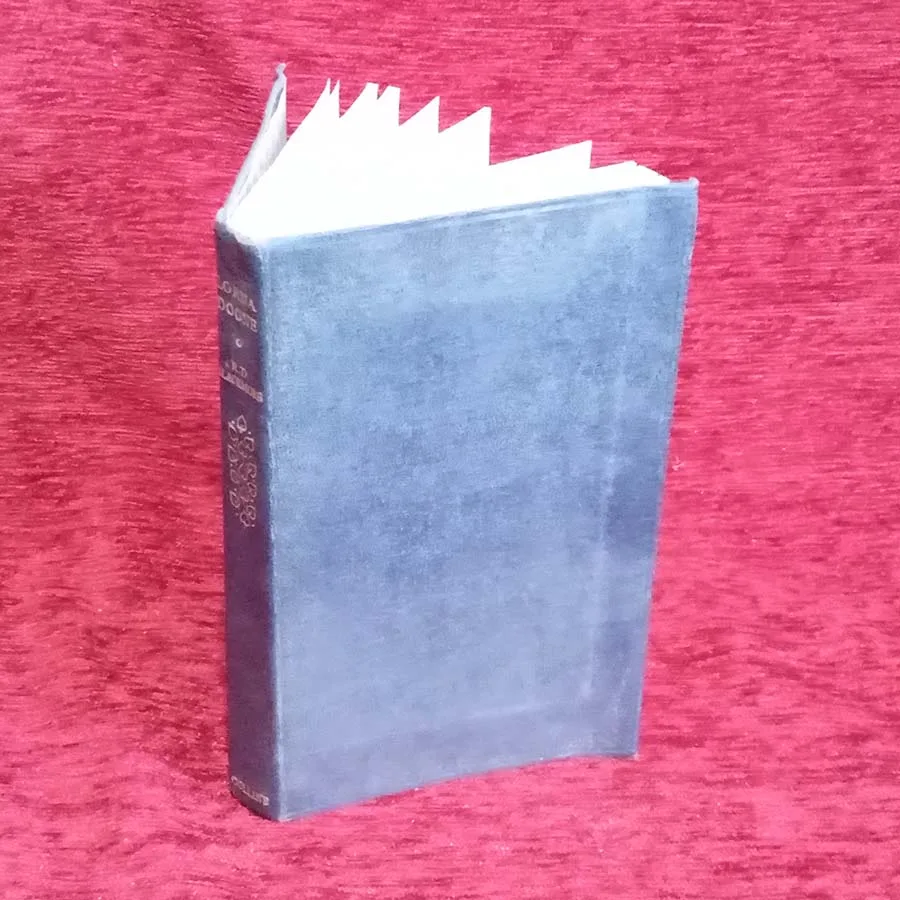
Publisher: Collins
Format: Paperback
ISBN: none
Some novels merely tell a love story. Lorna Doone gallops in over Exmoor with family feuds, outlaw grandeur, sweeping landscapes, improbable passion and enough moorland atmosphere to dampen the furniture. R. D. Blackmore’s great Victorian romance remains one of those books that refuses to do anything by halves. It wants wild country, old hatreds, noble suffering, dramatic reversals and a heroine whose very name seems to arrive trailing mist and destiny.
This 1963 Collins edition brings that whole splendid apparatus into a compact mid-century form: the kind of book produced when publishers still believed classic fiction should be made sturdy, readable and just dignified enough to suggest that buying it might improve the moral tone of the household. Lorna Doone, of course, has been improving and agitating households for generations. First published in 1869, it is one of those novels that became so woven into English literary memory that people half-remember it even when they have not actually read it. They know there are Doones. They know there are moors. They know romance and danger are involved. They are correct.
At the heart of the story is John Ridd, a solid and decent hero of the old school, whose life becomes entangled with the beautiful and mysterious Lorna Doone, member of the very family one ought sensibly to avoid. The result is a tale in which love and enmity, landscape and lineage, all begin colliding in suitably dramatic fashion. Blackmore understood exactly how to make the countryside do narrative work. Exmoor here is not merely scenery. It is half the novel’s soul: brooding, beautiful, dangerous, and permanently ready to frame somebody’s emotional crisis against a very handsome horizon.
What makes Lorna Doone endure is its complete confidence in romantic scale. Modern fiction often likes to underplay itself, to murmur its feelings and avoid anything too obviously grand. Lorna Doone has no such inhibitions. It believes in love with weather attached. It believes in villains of proper menace. It believes in family history mattering very much indeed. It believes, above all, that a novel should give the reader a world to enter, full of danger, beauty and highly inconvenient emotional loyalties. One can smile at its fervour and still be entirely won over by it.
There is, naturally, something delightfully ironic in the book’s afterlife. For many people the title now carries a faintly biscuit-tin or confectionery aura, as though Lorna Doone ought perhaps to be served with tea rather than read in earnest. But that only makes the actual novel more fun when one returns to it. Far from being a decorative period piece, it is a robust and highly atmospheric Victorian entertainment, full of tension, movement and feeling. The name may sound gentle; the story contains feud, violence, class drama and moorland melodrama in admirable supply.
This 1963 Collins copy has exactly the kind of practical charm one wants in a reading edition of a classic. It is a soft-hardback, which is itself a wonderfully halfway British invention: not quite limp, not quite rigid, but determined to remain serviceable all the same. The outer cover edges are slightly flared, the sort of honest wear that comes from life on actual shelves rather than preservation in a sterile collector’s vacuum. Even better, the cover is cleaner than the image suggests, which is always a pleasing discovery and gives the book a tidier presence in the hand than a photograph might imply.
Its Fair condition feels entirely fitting. A novel like Lorna Doone ought to look at least a little handled. It is not a fragile drawing-room ornament but a proper narrative machine, built for reading, rereading and occasional rediscovery. Fair copies of classics often have more personality than pristine ones. They suggest the book has done what it was meant to do: been opened, carried about, perhaps read in weather not wholly unlike its own. There is something rather satisfying about that.
For the modern reader, Lorna Doone offers several pleasures at once. It is a classic romance, certainly, but also a piece of English historical drama, a landscape novel, and a fine reminder that Victorian fiction could combine sentiment and incident with astonishing confidence. It will appeal to lovers of older storytelling, readers fond of moors and melodrama, and anyone who suspects that the best way to improve an ordinary week is with a little outlaw menace and doomed-looking devotion.
In short, this 1963 Collins edition of Lorna Doone is a pleasing, characterful reading copy of one of the great romantic adventures of English fiction. In Fair condition, with slightly flared cover edges and a soft-hardback binding, it remains a very attractive Crappy Old Books survivor: atmospheric, dramatic, and still fully capable of sweeping the reader away to a world where the moor is wild, the feud is old, and love is never sensible enough to keep out of trouble.
Keep browsing: See more Fiction books Other books by RD Blackmore
